One thousand years of slavery. Millennia of defeat and domination caused by a dogmatic adherence to the doctrine of ahimsa, preventing an effective resistance to foreign domination. This is what most Hindus are brought up to believe about their history.
These and other such theories are happily put forward as history of Hindus for the past 14 centuries and postulated by self proclaimed scholars from both within and without the Hindu fold. It was something I have heard from my youth and accepted without question.
 However some thoughts rankled in my mind. If the Hindus were truly slaves for a thousand years plus, then how have we survived to this day with dignity and honour and with a spiritual tradition stretching back to the mists of time and beyond? Many other cultures, civilisations and spiritual traditions have been reduced to museum pieces, but the words of the Holy Vedas are recited in an identical fashion today as they were thousands of years ago when first revealed to the Rishis.
This is no mean achievement.How did Hindus survive and manage to maintain a civilisational identity stretching into the dawn of human history? How was Sanatana Dharma kept alive as a living presence in the world, and indeed regenerated over time if the Hindus were slaves for so long? This impelled me to look for the truth myself, and undertake a study of the history of the Hindu people.
The beginning of Hindus’ “thousand years of slavery” is supposed to have begun with the overrunning of India by Muslims of Arab and Turkish origin. It is popularly believed that Hindus put up a feeble defense and that the Islamic armies had a cake walk through India. If we examine at what actually happened, however, we see that Hindus put up a huge struggle, which was eventually victorious.
 Following the death of their founder, Muhammad we see the Arab Khilafat expand swiftly over the Middle and Near East, pouring over the deserts of North Africa and crossing the waters to begin a six century occupation of Spain and beyond. The combined might of Christian Europe struggled again and again to reclaim the ‘holy lands’ to end in bitter failure with the rise of the Ottoman Empire, who ruled over a large part of Eastern Europe for centuries.
On the other side, the lands of Iran, home of the ancient and historical Persian civilisation fell to the yet undefeated Arab warriors and within a short period the indigenous culture becoming extinct or expelled, today being largely the confine of museums and relics. The Arab hordes then pushed into the Indian Subcontinent, land of the Hindus, overwhelming the small desert region of Sindh and then attempted to push and conquer the existing Hindu kingdoms. Here however their advance was stopped.
 With the inspiration of Sant Gorakhnath the warrior clans of the Rajputs united under their legendary king Bappa Rawal and in a series of Battles known collectively as the Battle of Rajashtan inflicted a heavy defeat on the Arab invaders in 738 CE. Any further advances by the Arabs were repelled, impelling the formation of large organised Hindu states in the centre and west of India. Frustrated by their failures in India the Arabs turned northwards shortly after defeating the Chinese Empire in the Battle of Talas in 751 CE opening the gate for the Islamisation of Central Asia. India remained unaffected for another three hundred years. (the “thousand years of slavery theory” was beginning to shake)
The Islamisation of Central Asia began to grow apace and one by one the ancient Buddhist kingdoms began to totter and fall as tribe after tribe joined the ranks of the growing Muslim religion. The destruction of Buddhism and its centers in the region prompted an exodus towards India, and the conversion of the remaining clans to Islam. The Muslim armies were expanded, filled with the zeal and energy of new converts, who were sent spiraling towards the Middle East to fight the advancing Crusaders under the leadership of Saladin. Another wave of attacks poured towards India resulting in large scale damage and loot from the subcontinent under the leadership of Mahmud of Ghazni around 1000 CE.
 Two further centuries passed as further advances were resisted until a breakthrough around 1200 CE allowed the invaders access to the North Indian plains. The remaining Buddhists were slaughtered or converted in an unprecedented orgy of violence and horror. The majority Buddhist regions of Afghanistan, Kashmir and West Punjab joined the crescent banner of Islam. However the conversion of Hindus was slower and the resistance was more fierce. Hindu warrior clans kept up a relentless resistance fighting from the deserts, the mountains and the forests. The heavy cavalry of the Muslim Turks which had proved fatal to the Crusaders of Western Europe were victorious on the plains of North India but this did not prevent an endless cycle of attack and counter attack by the Hindus.
It took nearly another hundred years under the leadership of the infamous Aladdin Khilji for the Muslims Empire firmly established itself in India. This mantle was inherited by the Tughlaqs only to lead to a revival from the Hindu population.
 The religious traditions of India had been severely mauled by the endless bloodletting over the past two centuries. Many important institutions and temples were destroyed. Prosperity suffered, as it tends to in times of continuous war. This created a certain weakening of Hindu society. Religion became preserved in rituals which were less and less understood. Sanskrit learning was on the decline. Caste became more rigid.
However, a religious renewal took place in the form of the “Bhakti movement”. A simplified form of Hinduism particularly suitable to the times emerged. A new wave of spiritual teachers preaching that simple devotion and love of God and love of all people and creatures is the simplest root to salvation. A message of defiance and brotherhood from saints and rishis from all corners of India emerged. From Tukram and Namdev from the west of India, from Nanak in Punjab, from Chaitanya in the east and Kabir in the north plus many others, the message of dharma revived itself in the teeth of an implacable enemy.
The fearless postulating of the brotherhood of all mankind defied the savagery raging around them as the Turks endeavoured to convert the entire subcontinent to Islam and the Hindus fighting tooth and nail to resist. The Muslim empire seemed to rest on specified military encampments and cities surrounded by a sea of hostile Hindus usually left to their own devices. Hundred of Rajahs and Maharajahs dotted the nation living in virtual independence from the central authorities in which traditions of culture and religion were maintained unchanged through the centuries.
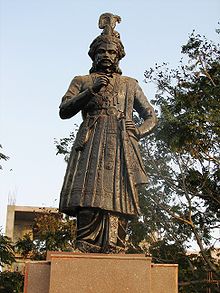 Other larger organised resistance emerged in the Vijaynagara Empire of South India around 1336 CE which consolidated Hindu resistance for over two centuries. In the north the revival of the Rajput kingdoms and the defiance of kings like those of Orissa under the Gajapati Kings, the hills of Punjab under Jasrath Khokhar and the rise of neo Hindu kingdoms in the north east of India along with the entire hill region signaled the revival of Hindu rule over vast tracts of India.
A steady period of Hindu growth then ensued until by the dawn of the 1500’s the southern region of India was dominated by the mighty king of the Vijaynagara Empire, Krishnadevarya and the north by the revival of the valiant Rajputs under the charismatic leadership of Rana Sanga (grandfather of the equally illustrious Rana Pratap).
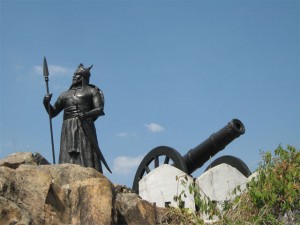
The tides of history however turned again – with the influx of cannons and other artillery utilised by Babur the Mughal entered into the Indian subcontinent against which the wild charges of the Rajputs and Pathans had no answer. The reckless disregard of their own lives in the defence of dharma saw a series of battles in which the Hindu forces fought quite literally to the last man woman and child, most famously the siege of Chhitor in 1567. The utter refusal of the Hindus to surrender in the century old tussle with Islam for political control over the subcontinent was a lesson not lost by the new Emperor Akbar.
 He instead moved away from the tenets of Islam to a new faith of the Din i Ilahi. By following the age old traditions of religious toleration in India he endeared himself to the majority population and through a period of compromise and alliance brought a brief period of peace to the troubled land.
This tenuous alliance was shattered by his descendant Aurangzeb who in his zeal for the establishment of an Islamic state caused an upheaval which left the Mughal Empire fall beyond all hope of repair.
The renewal of the civilisational Hindu-Islam conflict saw the rise of a generation of Sants and holy men inspiring the people for the defence of dharma which saw the might of the Mughals humbled by Rajputs, Marathas, Jats, Satnamis, Ahoms, Bundelas and others. In a cataclysmic wave of defiance the Mughal Empire lay broken and on its ruins rose a number of Hindu states competing for space in the subcontinent.
The inspirational rise of the Maratha king Shivaji and his bold defiance of the Mughal empire in the noontide of its realm is an apt example.
Who did the British wrest control of India from?
When the British came on the Indian scene, it is thought or assumed by many people that he British took control of India from the Mughals. This is not true. In fact, by the time that the British emerged as a major force in India, the Muslim political power in the subcontinent had been virtually cast down.
The situation is best defined by a British author, H.G.Keene
[box_light]
The idea, however, that the British have wrested the Empire from the Mohamadans is a mistake. The Mohamadans were beaten down — almost everywhere except in Bengal — before the British appeared upon the scene; Bengal they would not have been able to hold, and the name of the “Mahratta Ditch” of Calcutta shows how near even the British there were to extirpation by India’s new masters. Had the British not won the battles of Plassey and Buxar, the whole Empire would ere now have become the fighting ground of Sikhs, Rajputs, and Mahrattas and others. Except the Nizam of the Deccan there was not a vigorous Musalman ruler in India after the firman of Farokhsiar in 1716; the Nizam owed his power to the British after the battle of Kurdla in 1795), and it was chiefly British support that maintained the feeble shadow of the Moghul Empire, from the death of Alamgir II. to the retirement of Mr. Hastings. Not only Haidarabad but all the other existing Musalman principalities of modern India owe their existence, directly, or indirectly, to the British intervention.
[/box_light]
 The march of western civilisation ended the Hindu revival at a time when Hindus exercised control over almost the entire subcontinent. But it took Three wars with the Marathas, two wars with the Gurkhas, war with the Jaats, also smaller ranging wars with the Santhals, Sanyasis and many others .
Hindus unwillingness to surrender culminated in the huge uprising from the predominantly Hindu sepoys in 1857 which almost brought the British Indian Empire to a swift conclusion being the largest anti colonial uprising in history. The end result was 90 years of imperialist rule.
This was matched by a concerted disarming of the population by the British rulers, leaving only select regions free from the disarming which were perceived as loyal to the British under the flawed marital race theory. This theory propagated by the forerunners of the concepts of eugenics and Nazism believed the Indian races could not match the British combination of physical and mental facilities.
Thus a large percentage of Hindu population, despite holding sway of almost all of the Indian subcontinent were delegated into the non martial section by the British. Other sections believed to be of sufficient physical abilities (but not mental development) were delegated by the Imperialists as ‘martial races’ This flawed theory was propagated as an absolute truth (still followed by some) and together with the disarming of the population led to the diminishing of the martial spirit amongst Hindus.
 However the theories propagated by the British found challengers from the Hindus. Spurred by a revaluation of their history and the knowledge of western theories a new revival began to take fruit. From the universal preaching of Swami Vivekananda to the guns of the Anushilan Samiti the Hindus were at the forefront of a growing anti colonial challenge to the most powerful empire in the world. Finally finding control of the subcontinent untenable in the teeth of endless opposition the British Indian Empire collapsed in a wave of unprecedented bloodshed which has seen a slow and steady spread and reach of the Hindu world.
So again, I was stumped by this ‘thousand years of slavery’ theory. I was even more surprised to find this postulated by otherwise very earnest Hindus in the mistaken belief of their own history.
When examining our history I saw a spirit of defiance stretching over a thousand years in the face of implacable and merciless enemies, who put an end to many other cultures and civilisations. The same forces which had overcome virtually every indigenous civilisation in the world had thrown their entire might against India – and failed.
 Attack after attack was defeated. Horrific massacres did not force the people to abandon their religion and identity. The destruction of holy places did not see dharma die but rise again and overcome their opponents with the power of truth. The banner of freedom was raised generation after generation despite the best attempts of some vested parties to blur the truths and sacrifices made again and again.
So 150 years of effective rule by the Muhamadans and 90 years of British rule was suddenly expanded into ‘one thousand years of slavery’ an utterly absurd contention is being bandied about like an absolute truth but has failed to hide the facts that remain unaltered in history. Ancient faiths like Buddhism and Zoroasterism were almost obliterated from the Middle East, Central Asia and India but the Hindus rose in defiance to emerge even stronger at the end of the blood soaked millennia.
Even well wishers of Hindus, lost in their Victorian outlook on India have propagated the same absurdities in total insult of the enduring Hindu spirit. The spirit is best exemplified by the renowned historian Sir Jadunath Sarkar when talking of the legendary Maratha king Shivaji:
[box_light]He [Shivaji] has proved that the Hindus can still produce not only clerks and soldiers but rulers of men. (…) Shivaji proved that the tree of Hinduism is not really dead – that it rose from the seemingly crushing load of centuries of attack and put forth new leaves and lifted its head to the skies.[/box_light]
Read Part 2 of this article > Did the British save Hindus ?
Author: admin
(41280)

admin
Latest posts by admin (see all)
- The Ideals of the Kshatriya – Warrior - July 28, 2022
- Testing post to check FB comments - June 2, 2021
- Ramakrishna Paramahamsa : The Eternal Mystic - April 17, 2018
A student of Indian history won’t ever believe Muslim rule in India was sweeping or constant. Islam in India was about fits and starts. It was about invasions — many of which were valiantly beaten back by the Hindus. The titanic Maratha and Rajput struggle with the Muslims in the north and West, runs alongside countless smaller battles by Hindu kings across the country. It was only the lack of a strong centre that led to early Islamic success in India. The absence of a Maurya or Gupta empire in India coincided with the rise of Islam in Arabia. Harsha was the last major kingdom in the north, and his battles with Pulakeshin of the south prevented another pan-Indian empire. The rest as they say is all history.
Rakesh ji,
Whose website is this? Can we talk about the content through Email.
Regards,
Kamlesh
thank u
The easiest way to weaken and then destroy a people is to attack from within.By cultivating traitors. Cultivating traitors is no more different than making human bombs. Today there is a traitor in every pincode of India. Believe it or not.How else can you explain a person of foreign origin at the head of a country of 1200 million people. She is virtually deciding for us how we should run our country. And it is for all to see how this country is being run. She has created an army of fools who are willing to sell this country. Rajiv Dixit was right this country is not yet free. Others are deciding for us.
This is very well understood by christians and muslims and that is why they do not allow foreign ideas to grow or develop.
I will take this opportunity to inform that I have free web space if any information needs to be put there.
The Myth of “1000 Years of Hindu Slavery” | Hindu History – Unfolding the Epic History of the Worlds Most Ancient and Spiritual Civilisation
[…] Also Read The Myth of “1000 Years of Hindu Slavery” […]
ours is continuing civilization, but with huge demographic changes it will become more difficult and islamization will happen once this demographic changes attains a sound level. most of the youth are becoming more and more westernized and most of them dont have an aura of knowledge about their past. all this is serious threat because when hinduism was under threat, sivaji raised but now all youth are replica/no faith/take it easy fellows and they care low even if this country become islamic state or other. this “no care” attitude had its origins in distorted history teached to them for the sake of satisfying muslims and in return to have political gain. this cycle ruins us slowly, even we cant infer that so that even breaking forces raises they accepts without resist. what happens if you dont know whose your father is? is society respects you? no. similarly, if we didnt know our history, our richness how can you expect from this world ,the honour bharat deserves.
1. In all its diversity of geography, history, languages, religions, rituals, beliefs etc what was & is common thread linking the people of India together ? a) All Indian languages can be traced back to mother language Sanskrit. b) . Anecdotes, idealism, social ethos, life styles of aam aadmi & rulers as depicted in Ramayan & Mahabharat. c) Religion based on & around Ram & Krishna or even on & around their absence!
2. What divides Indian or say Hindu society? a) Chauvinistic approach to respective languages. Tamil considered superior over lets say Hindi, Hindi over lets say Kannada & so on so forth. b) Hindu religion itself! From time immemorial there have been theories, philosophies, ideas about god & even non-existence of god. Both existed concurrently without any apprehension of physical annihilation of believer &/ or non believer just because he is believer or non believer. Truly democratic functioning of highest level! Further, I can have an Isht devta, my family has a kul devta & there is gram devta & so on . These devetas may not be same. Within the family or clan rituals & processes of pooja path may differ & with this their ideas on social relations & functions may differ to very large extent. This was & is true for aam aadmi as well as the rulers. This is democratic rights going too far even leading to fragmentation of social fabric. Then comes the Varna pratha., Sati pratha, Dahej pratha, bal vivah pratha & other such nuisances which fuel fragmentation. As per Varna pratha Khatriyas were to fight. Why should others – brahmin, vaishya & khsudras get trained to fight? And why should brahmin do anything else than teach? So seeds of weakness or disintegration are already there or were there. This was open invitation for invaders. Still is?
3. India became a nation state in 1947. Boundaries prevalent now & ‘elected’ rulers were never there historically. By now India is a huge cauldron of humanity, ideas , languages, religions, geo resources, historical abbe rations & slowly cruising through a difficult period.
Harping on Brahminism is not of any help in such a scenario.
[…] the Islamic forces. In reality Robert Clive, Warren Hastings and others encountered a confident and resurgent Hindu India in the eighteenth century. Marathas, Rajputs, Sikhs and others had torn up the once mighty Mughal […]
[…] British saved Hindus? An incredible myth if ever there was one. In fact the Marathas in particular were winning the battles against the […]
[…] to fade away. Despite the fact that Hindus in every part of the world where they were present gave stiff resistance to invaders, be they Crusaders or Jihadis, the contemporary Hindus just don’t want to accept the facts. I […]
HAR HAR MAHADEV
JAY SHREE RAM
[…] Also Read : The Myth of “1000 Years of Hindu Slavery” […]
[…] the myth that the British saved the Hindus from Islamic oppression is exploded. Islamic rule was already on the retreat and the exponents of jihad fantasised about […]
Kindly send this link to our PM Mr Modi. who said today in parliament that ” we where in slavery from past 1200 years” aka RSS speaking
1. I agree with ‘musalman ‘ who has commented above. If PM Feku himself is idiot and says in Parliament ‘ 1200 years of slavery , he shud b thrown out.
2. Someone has commented above that why Brahmins only shud teach and why Kshatriyas only shud fight ? Etc. This’s not true. Great Parsuram , a Brahmin , wielding an axe , had slaughtered all Kshatriyas from the earth 27 times ! Even pregnant ladies and children were not spared. He’s first noted terrorist in the world. Brahmins worship him as hero. Gujarat observes a holiday on his birthday.
There’s example of Dronacharya and his son Ashvathama also who, though Brahmins , had fought in Mahabharat war. Peshwas were Brahmins and they did take part in wars. Jats were shudras , they formed kingdoms . In fact , some days before the third battle of Panipat , Sadashiv Bhau , the Senapati of Marathas had insulted Surajmal Jat of Bharatpur who had come to help Marathas , saying, you r not a real Kshatriya but a Shudra – a Jat ! So Surajmal Jat had left with his army of 90,000. Marathas had lost that battle .
75000 Marathas were killed in one day – 14/1/1761 . But the flag of Hinduism was held high by observing its principles ( fatwas ? ).
In the last Anglo – Maratha war , the Mahar regiment ( Mahars r at somewhat near the bottom in Caste system of great Hindus ) under the English, had defeated the Marathas !
3.Hu En Sang , the Chinese philosopher who had come during Chandragupta Maurya has written, the position of Chandals is very bad . They are untouchables , not allowed in the towns / villages , they reside on the periphery and if at all they come out, they have to shout to beg so that Caste people may not get even their shadows on them ! Abdur Razak & Nikolo Kunti write almost same about the conditions of the lower castes . Our PM Feku comes from one such mahadalit caste, as per his saying ! Great Hindus, even now observe such great traditions in many areas ! Both these, otherwise , praise the prosperity of the State then.
4. Arabs , after Sindh, had won Valbhipur in Saurashtra. When Mohd Bin Kasim attacked Multan ( Sindh ) , local people believed that till a flag of the King at the highest place is there, nothing bad can happen to the King or Kingdom ! So Bin Kasim first destroyed the flag to demoralise the local army. After his first victory, he killed all the citizens. After his second victory, he killed all the Kshatriyas and many others except those Hindus, who accepted Islam by eating cow – meat !
5. The war with Gaznis was started by Shahi / Pal kings of Punjab , they had attacked Sabuktigin, father of Mohmed Gazni , but were defeated. Then Mahmus Gazni defeated them , time and again. Anangpal committed suicide on a pyre after a defeated and later on his son Jai Pal , adopted Islam.
6.Alaudin Khilji was invited to invade Gujarat by a minister of the King Karan Vaghela because his wife was abducted by the King. A slightly different Ramayan. Khilji became victorious.
7. In comments, a lady has made a comment about the worst conditions of Hindu ladies. Written proofs are available since the times of Parsuram. He had killed his own mother Renuka on the order of his father because she could not fetch the water for his drinking quickly enough from a river !
Other proofs r, how shabbily , Lord Ram had treated his wife Sita , and how wrongly Draupadi was treated as a chattel / thing and forcibly wedded to five brothers . Great Hindus revere Parsuram, Ram and Kunta – mother of Pandvas , on whose saying Draupadi was so wedded.
Not much has changed since then. PM Feku , highly revered by great Hindus , has abandoned his wife Jashoda , though she was innocent .
8.When Aryas invaded India over a long period of time, this country was mostly forest except some plains on the banks of rivers – Satluj, Beas, Ravi, Sindhu , Ganga , Jamna etc. Aryas killed local people terming them as Asurs, Danavs , Rakshas etc. From almost 99% population, they are now only 7.5% and termed as tribals .
9.Great Hindus will agitate if their rifle shots, which are to b treated by mouth before operated, have cow – fat or if a Ram temple is to b built . But none will raise a voice if a barrel of crude sells in international market at 37 dollars which means that petrol in India must b around Rs. 32 per litre only, but it sells beyond Rs 60 ! The loot is silenced in the rhetorics of love – jihad, beef – eating, Minority-bashing, send them to Pak etc etc.
10. ISIS entered into India via JK during First PDP- BJP regime and Pak- ISIS flags r waved and anti India sloganeering takes place so often , but Great Hindus , are silent ! China vetoes in favour of Masood and Pak in UNO, great Hindus r silent ! Busy in re – writing history.
11. Busy in showing that our great Rishis were able to fly, vanish, walk on water / fire etc etc. Some slokas and weapons deadlier than atom bombs were received personally from Lord Shiva etc.
God save great Hindus !
[…] The Myth of “1000 Years of Hindu Slavery” […]
While what the author of this brilliant essay opines and the subsequent comments below suggest, are all true, they are but different perspectives of a past colored by our own vision and conditioning. While it is true that Our culture was not wiped out the way it did in other countries, no one can deny that we were left severely crippled by the relentless onslaught. The impact of iconoclasm is painfully apparent in the North, East and West of India and to some extent in the South, like Hampi. But more significantly, the women of India lost the privileged position of being ardhangini or dharmapathni so much so that many Hindu men, esplly in the North of the Vindhyas, look upon them as not equal members of family or society but a piece of property, even after so many years. Their attitudes have largely been shaped by a people who regard them as men’s possession.The Purdah, the burkas, the ghungat that covers the face, the lack of education for girls, the honor killing are all the byproducts of a thousand year history. And when women in society have been devalued, the society itself takes a toll and that’s our sad part of history!!!
Hi, to every one who read the history & who is going to read…. main point y indian Hindus think that they have been slave from many years, to Muslims and others no one is there to make slave to any one without there permission like they bow in front of any one and not have dearness to face fact then that person, that culture, that religion, that person heart, that person spiritually feelings….ect will be slave to every one…
Iam Muslim and i dnt believe that Hindus became slaves to Muslims… we from starting in mutual understanding and humanity we both ( Hindus & Muslim) role the country..
pls my humble request to u all that just sitting on computer and sending the comments that not right… just come close to Muslims and check them that they are really bad or other persons are trying to show them bad in front of u all…
See I agree that BAD SHEEPS ARE THER IN EVERY RELIGION U ALL KNOW BETTER.
but dnt point out only BAD, GOOD sheeps also there try to interact them,
If u dnt interact with them how u can take decision that they role on u or not…
dnt bilive on others words ur in 21st century be a practical..
thank u..
May God bess u all..
Hi, to every one who read the history & who is going to read…. main point y indian Hindus think that they have been slave from many years, to Muslims and others no one is there to make slave to any one without there permission like they bow in front of any one and not have dearness to face fact then that person, that culture, that religion, that person heart, that person spiritually feelings….ect will be slave to every one…
Iam Muslim and i dnt believe that Hindus became slaves to Muslims… we from starting in mutual understanding and humanity we both ( Hindus & Muslim) role the country..
pls my humble request to u all that just sitting on computer and sending the comments that not right… just come close to Muslims and check them that they are really bad or other persons are trying to show them bad in front of u all…
See I agree that BAD SHEEPS ARE THER IN EVERY RELIGION U ALL KNOW BETTER.
but dnt point out only BAD, GOOD sheeps also there try to interact them,
If u dnt interact with them how u can take decision that they role on u or not…
dnt bilive on others words ur in 21st century be a practical..
thank u..
May God bess u all..
all muslims are converted hindus right from pakistan to afghanistan, and these same cannon fodder converts tell today that muslims ruled india for 1000 years two days back some one from pakistan i punjabi in arnabs talk.
[…] https://www.hinduhistory.info/the-myth-of-1000-years-of-hindu-slavery/ […]
Indian spirit is not slavery. Indian spirit is autonomy. Freedom of thinking and proper action are the essence. We were defeated by the advanced technology of canons in the past and later by guns of the British. We still believed in individualism and myths of Puranas. Even now we are paying attention to Puranic stories than the spirit of Hinduism. Technology and research and innovation are important. Though our scientists and spiritualists believe in the progress the political forces of “democracy” use stories to subjugate the common people. The greatest dis-service was done by Nehru by introducing democratic socialism with central control. The States should be given greater power to improve their regions. Center should take only defense and international affairs. Merit, hard work and innovation should be the goal. Hope we will not become vassals to Pakistan or China.
Such writeups are not only inspiring but necessarily important to unlid the deeply buried facts and truths of our history and heritage. We might have succeeded in repulsing the mighty attacks perpetuated from centuries together but in the process we have suffered great geographical losses as well, to which history stands a witness. “unan-o-misre roma sab mit gaye jahan say, ab tak magar hai baaqi nam-o-nishan hamara “as asserted by IQBAL (who subsequently believed,subscribed and vigorously attributed in establishing Pakistan, an antithesis to his SAREY JAHAN SAY ACCHA HINDUSTAN HAMARA) must not make us complacent. The forces within our present day political dispensation are growing stronger day by day and are hell bent to destroy whatever happens to be preserved so far. So we as the progeny of a glorious legacy have a great moral responsibility to awake and rise to the challenge of saving and protecting our SANATAN and SANSKRITI. ARISE AND AWAKE should be the call, not just the call but a serious call to act.
[…] https://www.hinduhistory.info/the-myth-of-1000-years-of-hindu-slavery/ […]
Actually this point of our history should be taught and emphasised to the people. So that Hindus think of themselves as a martial race and not as slaves.
Unity in region religion and caste is the prerequisite for the victory to be ours …always.
Proud to be a Sanatani, a Hindu.Thanks for the article.
[…] the myth of the thousand year slavery being exposed in our previous article composed of two parts – the first being the attacks […]